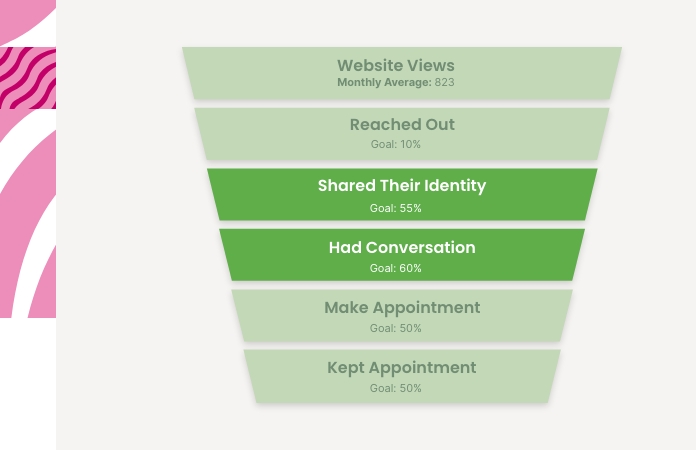
Getting someone to reach out is an important milestone, but it does not necessarily mean they are ready to engage in a conversation or share personal information.
In Her Journey, a Shared Identity (or a lead) is someone who provides identifiable information, such as their name, phone number, email address, or other contact details. Validated form submissions are automatically counted as leads because contact information is collected as part of the submission process. However, someone who clicks on the HopeSync widget or sends an initial text message may not become a lead if they choose not to share identifying information.
A Conversation occurs when meaningful back-and-forth communication takes place. This often includes the client sharing information about their situation, asking questions, responding to staff messages, or engaging in a dialogue that helps move them toward an appointment or decision.
While marketing plays an important role in generating leads, increasing conversations is often influenced by a center's response process, HopeSync configuration, staffing, and communication strategy.
Many of the factors that improve leads and conversations begin with strong outreach practices. Before implementing the recommendations below, make sure you are also following the guidance outlined in the Best Practices for Increasing Outreach article.
The following checklist is organized from highest to lowest impact, while also considering ease of implementation. Centers looking for the biggest return on their time should focus on the items near the top of the list first.
1. Create Warm & Reassuring Auto Responses
The first message a client receives often shapes their perception of your center.
Many auto replies are written primarily for compliance purposes and can unintentionally feel cold, robotic, or transactional.
Best Practices
- Review your HopeSync auto responses and consider how they would feel to someone reaching out during a stressful situation.
- Use language that is warm, welcoming, and reassuring while still including any required compliance language.
- Set expectations by letting the client know when they can expect a response and reminding them that support is available.
Example
Instead of:
"Thanks for texting CENTER NAME. We will respond soon. Dial 911 if this is an emergency. By continuing you acknowledge SMS is not a secure method of communicating and you accept the risk and still wish to receive SMS text messages from us. Reply STOP to end."
Consider something more like:
"Thank you for contacting CENTER NAME. We’ve received your message and we will reply shortly. If you need immediate help, dial 911.
Please note: while texting isn’t a secure method of communicating, your information stays confidential between our nurses and staff. By continuing, you accept this and agree to receive texts from us. Reply STOP at any time to opt out of communications with us.”
Why It Matters
The first few moments after outreach are often when clients decide whether they feel safe sharing more information. A warm introduction can help build trust and encourage deeper engagement in the conversation.
2. Respond Quickly
One of the strongest predictors of whether a lead turns into a conversation is response time.
This is especially true for Abortion Minded (AM) and Abortion Determined (AD) clients. These clients are often actively researching their options and may be reaching out to multiple organizations at the same time. The longer the delay, the more likely they are to disengage or connect elsewhere.
Best Practices
- Aim to respond within a few minutes whenever possible. Internal HopeSync data consistently shows that the highest engagement rates occur when staff or nurses respond within the first few minutes after outreach. The longer it takes to respond, the higher the likelihood of dropoff.
- Monitor response times regularly and look for patterns where inquiries may be sitting unattended. Actively optimizing your processes can significantly impact conversion rates, appointment scheduling, and overall client engagement.
Why It Matters
The moment someone reaches out is often when they are most motivated to engage.
4. Align Expectations Between Marketing & Reality
The experience someone receives after reaching out should match the expectations created by your advertising, website content, and service pages.
Best Practices
- Pay close attention to situations where AM/AD clients frequently stop responding or unsubscribe from communication after initial engagement. This often indicates a gap between what the client expected and what they experienced after reaching out.
Example
Some PPC campaigns targeting abortion-related searches may unintentionally create confusion about the services a center provides. If a client reaches out expecting one type of service and discovers something different during the conversation, they are much more likely to disengage. High drop-off rates can be a sign that your advertising, website content, and conversation flow need better alignment with the services you actually offer.
Why It Matters
High stop rates or large numbers of abandoned conversations can sometimes indicate that your marketing, website content, and client experience are not fully aligned.