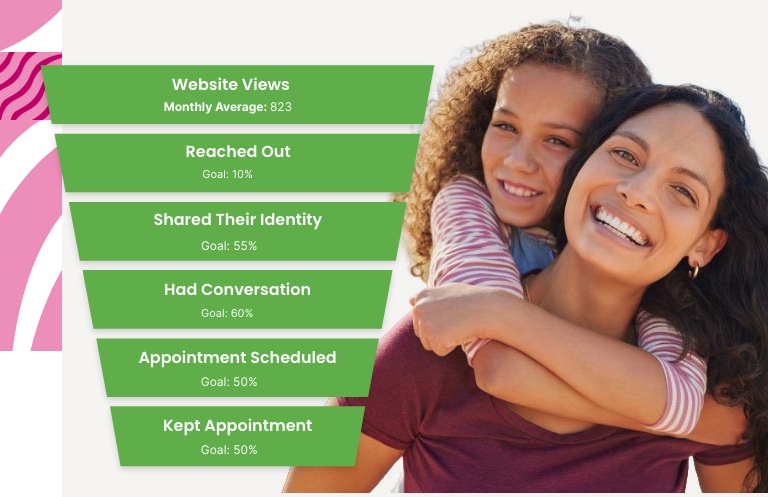
Every step in the client journey presents an opportunity to create greater impact. This guide breaks down the key stages of the Her Journey Engagement Funnel, explains what each metric measures, and highlights practical best practices that can help improve performance.
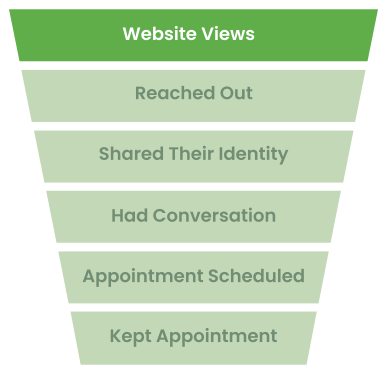
Increase Website Visitors
Primary Owner of Success: Marketing
Website Visits, also referred to as sessions, show the number of people who view your website. Benchmarking data isn’t tracked on this stage of the Engagement Funnel, because best practices for each center’s website will vary widely depending on population and competitor overlap within a service area.
Marketing and messaging have the biggest impact on this engagement step.
If you are experiencing low Website Visitors, here are a few best practices worth trying.
Best Practice Checklist
- Focus on local visibility. You can help people find your center by clearly describing your services and location throughout your website copy. Use your city, county, and regional area names for keyword variations. Adding a hyperlink to your Google Business Profile or map listing also helps clarify to search engines and AI where you are located.
- Strengthen your service pages. Create dedicated pages for each core service your center offers and clearly explain what clients can expect. Well-developed service pages help Google and AI tools connect your website with more relevant searches, increasing opportunities for potential clients to find your center online.
- Build a strong local reputation. This can take place both in person or online. Focusing on collecting 5-star Google reviews, having local businesses link directly to your website, and maintaining accurate online directory listings (like Google Business Profile or Yelp) can help increase visibility. Word of mouth or participating in community events can also play a role in this.
- Pay for more visibility. Paid ads can help more local clients find your center online. Focus on promoting your core services, target the communities you serve, and regularly review your results to ensure your budget is being used effectively.
- Helpful content creation. Publish content on your website that answers common pregnancy/abortion-related questions and provides valuable information to your community. Helpful content can improve search visibility and AI snippet features. Using medical citations and client testimonials helps with building authority in the eyes of both people and technology.
- Make page titles & meta descriptions more compelling - Make sure the preview text that people see when searching online clearly describes your services and your center. Sometimes this takes experimenting to see what resonates best. Most websites let you customize these settings across your website pages. Ask your marketing team for help if you aren’t sure where to go.
To learn more about these best practices above, here is a resource you might find helpful.
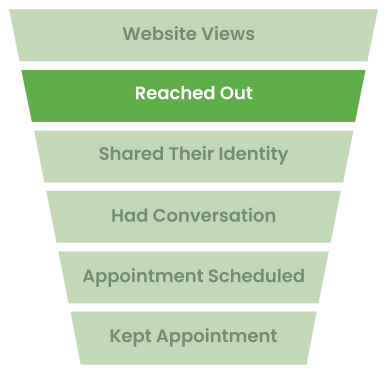
Increase Who Reaches Out
Primary Owner of Success: Marketing
Who Reached Out, also known as initiations, tracks the number of people who took an initial step to contact your center. This includes clicking on the HopeSync widget, submitting a website form, sending a text message or calling your HopeSync number. Reaching Out does not necessarily mean a conversation took place with your staff or that personal information was shared.
Marketing, messaging, and user experience across the website have the biggest impact on the number of website visitors who take the next step to reach out.
Best Practice Checklist
- Make it easy for people to contact you. Ensure visitors can quickly find and use your contact options from any page. Offer multiple ways to reach out (text, call, form, widget) and remove unnecessary friction that could prevent someone from taking the next step.
- Optimize for mobile users. Most visitors will view your website on a mobile device. Make sure key information, contact options, and appointment requests are easy to find, easy to click, and accessible without excessive scrolling.
-
Keep barriers and friction low. Reduce fear and uncertainty by clearly explaining what visitors can expect, leading with the value of your services, and keeping the outreach process simple. Use welcoming, easy-to-scan content that encourages visitors to start a conversation.
To learn more about these best practices above, here is a resource you might find helpful.
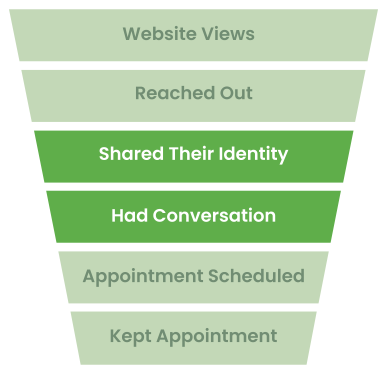
Increase Sharing Identity & Having Conversations
Primary Owner of Success: Marketing + Center
Shared Identity, also known as leads, represents people who share identifying information such as their name, phone number, or email address. Validated form submissions are automatically counted as leads, while someone who clicks on the HopeSync widget or sends an initial text message may not become a lead unless they choose to share identifying information.
Conversations represent meaningful back-and-forth communication between a potential client and your center.
Marketing and website messaging have the biggest impact on lead generation, while response times, staffing, and communication strategy often have the greatest impact on conversion rates.
Best Practice Checklist
-
Respond quickly. Fast response times are one of the strongest predictors of whether someone will continue engaging after reaching out, particularly for AM/AD that may drop off in 3 to 5 minutes if not responded to. The sooner a client receives a response, the more likely they are to share information, continue the conversation, and schedule an appointment.
-
Create warm and reassuring auto responses. Auto messages set the tone for the conversation. Use welcoming language that feels personal and supportive while clearly communicating what the client can expect next.
-
Align expectations between marketing and reality. Make sure your advertising, website content, and conversation flow accurately reflect the services you provide. When expectations and reality do not match, clients are more likely to disengage or stop responding.
To learn more about these best practices above, here is a resource you might find helpful.
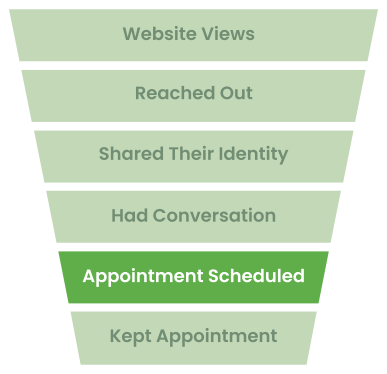
Increase Appointments Scheduled
Primary Owner of Success: Center
A scheduled appointment represents the point where a potential client moves from gathering information to taking action.
Centers have the greatest influence on appointment rates through their conversation strategy, scheduling availability, and follow-up process.
Best Practice Checklist
-
Identify and prioritize high-urgency clients. Develop a process for identifying and tagging AM/AD clients early in the conversation. Clients who are actively considering abortion often require faster response times and appointment availability than Likely To Carry (LTC) clients.
-
Create appointment availability for time-sensitive clients. Reserve flexibility in your schedule for same-day or next-day appointments when possible. High-priority clients are much more likely to schedule and show when help is available quickly.
-
Keep conversations focused on the appointment. Build trust, answer immediate concerns, and reinforce the value of an in-person appointment. The goal is not simply to keep someone texting, but to help them take the next step toward receiving support.
-
Review conversations that do not result in appointments. Look for patterns where clients stop responding, decline appointments, or disengage. Small improvements to your conversation flow, scheduling process, or staffing strategy can have a significant impact on appointment rates over time.
To learn more about these best practices above, here is a resource you might find helpful.
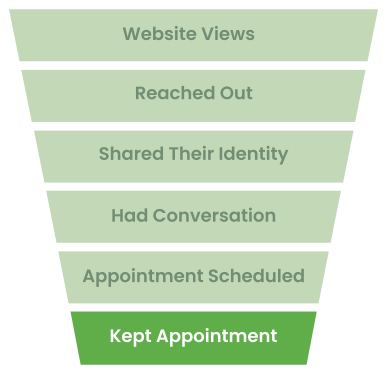
Increase Appointments Kept
Primary Owner of Success: Center
An appointment only creates impact if the client actually shows up. Appointment-kept rates are often among the clearest indicators of how well a center's communication, scheduling, and follow-up processes work together.
Best Practice Checklist
-
Maintain consistent appointment reminders. Send confirmation messages immediately after scheduling, followed by reminders the day before and shortly before the appointment. Include your address, Google Maps link, and contact information to make attending as easy as possible.
-
Follow up quickly on missed appointments. A missed appointment does not always mean lost interest. Reach out promptly, offer a simple path to reschedule, and continue follow-up attempts when appropriate.
-
Reserve flexibility for high-priority reschedules. Consider keeping a small number of same-day or next-day appointment openings available for AM/AD clients who may need immediate support and are less likely to wait for a future appointment.
-
Complete post-appointment follow-up. Update appointment outcomes, services provided, client outlook, and other relevant tags within HopeSync. Accurate data helps improve reporting, marketing insights, and the overall accuracy of your Her Journey metrics.
To learn more about these best practices above, here is a resource you might find helpful.